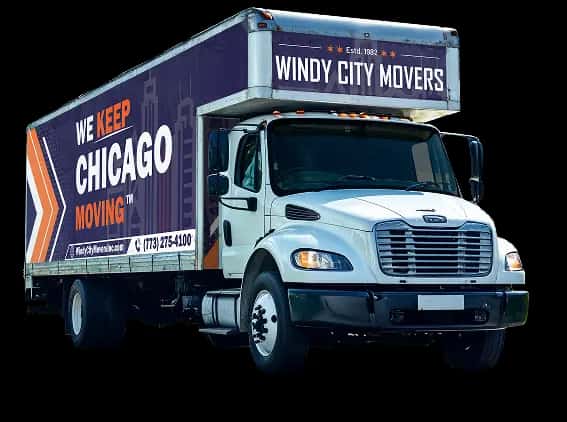
Prospect Heights Movers. The Small-Town Northwest Move

Prospect Heights Movers: The Small-Town Northwest Move
Prospect Heights is one of Chicagoland's smaller and more distinctive suburbs: about 15,000 residents, tucked between Mount Prospect to the south and Wheeling to the north, with a genuinely small-town character that separates it from its larger neighbors. Parts of the village retain a semi-rural feel with larger lots and mature trees, and the village is aviation-adjacent (Chicago Executive Airport, formerly Palwaukee, is essentially in the community).
If you're moving to or from Prospect Heights, here's what a real move actually looks like from a crew's perspective.
Where Prospect Heights sits
Prospect Heights is about 20 miles northwest of downtown Chicago. It borders Mount Prospect to the south, Arlington Heights to the west, Wheeling to the north, and Northbrook to the east. The village doesn't have its own Metra station; residents commonly use Arlington Heights, Mount Prospect, or Wheeling stations on the Metra Union Pacific Northwest line.
The drive from our Elston Avenue base to central Prospect Heights is roughly 40-50 minutes in normal conditions.
The small-town character
The single most distinctive thing about Prospect Heights compared to its neighbors: it's smaller and quieter. Where Arlington Heights and Mount Prospect have busy downtowns and dense residential development, Prospect Heights is more spread out, with some larger lots, mature trees, and a semi-rural feel in specific corners.
This character shapes what a Prospect Heights move looks like:
Longer approach roads to some properties, particularly on the north side Larger lots with more setback from the street Fewer building-rule complications than more urban suburbs Wider driveways in many homes
The Prospect Heights housing mix
Prospect Heights has a distinctive housing profile:
Single-family homes on larger lots. Much of the village has single-family homes on lots that are bigger than typical suburban lots, sometimes substantially so. Some homes have wooded surroundings.
Some smaller single-family neighborhoods. In specific areas, more traditional post-war neighborhoods with modest-sized lots.
Newer construction. Some newer homes throughout, including some substantial homes on larger lots.
Some condos and townhomes. A smaller share than most northwest suburbs.
Some horse-adjacent properties. In specific corners, larger properties with room for outbuildings, horse facilities, or hobby farming.
The Chicago Executive Airport factor
Chicago Executive Airport (KPWK, formerly Palwaukee) sits between Prospect Heights and Wheeling. This is a general aviation airport, not a commercial one, but it does mean:
Some aircraft noise in specific parts of the village. General aviation is quieter than commercial jets, but not silent.
Aviation-adjacent industry in the surrounding area. Some hangars, related businesses, aviation services.
No commercial flight-related traffic on residential streets. Airport-related traffic uses specific corridors that don't affect most residential moves.
The aviation-adjacent buyer. Prospect Heights actually attracts a specific kind of buyer: aviation professionals (pilots, air traffic controllers, aircraft mechanics, corporate flight departments) who work at Chicago Executive or O'Hare and want to live close to their airport-adjacent job. For these households, Prospect Heights is a lifestyle choice, not a compromise, and the "aircraft noise" that would concern some buyers is actively welcome.
If you're moving in for aviation reasons, our schedule can accommodate shift work and irregular hours; crews are available for weekday, weekend, and off-peak times.
Truck access
For most Prospect Heights homes, truck access is straightforward and often easier than in denser suburbs:
Wider streets in many neighborhoods Driveways that accommodate moving trucks in essentially all single-family homes Longer driveways in some homes, which affects carry distance but rarely truck access itself
Considerations:
Winter approach roads in the more rural parts of the village can be genuinely different in condition than downtown Chicago streets. If you're moving in winter to a home with a longer approach, verify the road condition.
Some larger properties with landscaped drives require careful positioning.
Gate access on some properties; coordinate ahead of time.
The school factor
Prospect Heights serves several school districts based on the specific address:
Prospect Heights School District 23 for K-8 in much of the village Township High School District 214, with Wheeling High School or other district schools serving high school students
The family-move calendar follows the school calendar, with July and August peaks.
Timing
Peak season: May through September.
Family moves cluster in July and August.
End-of-month moves book fastest.
Weekday moves are often smoother.
Winter moves work in Prospect Heights but require attention to approach roads for the more rural properties.
Cost drivers
Distance from our base. 40-50 minutes each way.
Home size. Prospect Heights homes vary substantially.
Carry distance for properties with long driveways.
Any specialty items.
Our rates don't shift by town.
Chicago-to-Prospect Heights moves
Common patterns:
Chicago single-family to Prospect Heights single-family with more land. The most distinctive Prospect Heights pattern, families choosing the village specifically for the more spacious feel.
Chicago apartment to Prospect Heights townhome. For customers wanting suburban with less maintenance.
For the timeline, our other city-to-suburb posts cover similar considerations.
The neighboring suburbs
Prospect Heights sits at an intersection of northwest suburb character:
Mount Prospect to the south is more traditional suburban. See our Mount Prospect movers guide.
Arlington Heights to the west is larger and more developed. See our Arlington Heights guide.
Wheeling to the north is similar in scale but with more commercial development.
Northbrook to the east is more established North Shore character. See our Northbrook movers guide.
Moves between any of these are essentially local for us.
Long-distance moves
Prospect Heights sees long-distance moves as well. Our long-distance moving service handles these directly.
What to send us for the quote
For a Prospect Heights estimate:
- Both addresses, with any notes about driveway length or approach road condition
- The property size and rough inventory
- Any large or specialty pieces
- The timing (school calendar, closing dates)
Where we fit
Our local moving service works Prospect Heights and the surrounding northwest suburbs regularly.
Call (773) 275-4100, email info@wcmoving.com, or start with a free quote.
Whether you're moving to a Prospect Heights single-family or a home on one of the more rural streets, we know the small-town corner of the northwest suburbs.
Windy City Movers — Your Trusted Moving Partner