Moving Brokers vs. Real Movers. Why It Matters

Moving Brokers vs. Real Movers: Why It Matters
You call a moving company that has a professional website, competitive pricing, and a friendly sales rep. You book the job. Two weeks later, an unmarked truck shows up with a crew you've never spoken to, working for a company you've never heard of. You just experienced a moving broker.
Brokers are legal. They're not automatically scams. But the distinction between a broker and a real moving carrier matters more than most customers realize, and federal law requires the disclosure for a reason. Here's what to know.
What a moving broker actually does
A moving broker doesn't own trucks. Doesn't employ crews. Doesn't have a warehouse or storage facility. Doesn't have moving equipment.
What a broker has: a website, a sales team, and relationships with a network of actual carriers who do the work.
When you book with a broker, this is what happens:
- You call and get a quote based on your inventory.
- You sign paperwork and pay a deposit to the broker.
- The broker sells your job to one of their network carriers.
- The carrier that shows up on move day is who actually handles your move.
- If something goes wrong, you have two companies to deal with: the broker and the carrier.
What a real moving carrier does
A real moving carrier owns the trucks, employs the crews (as W-2 employees, not gig workers), operates from a physical warehouse, and carries the insurance and licensing to move your goods themselves.
When you book with a real carrier:
- You call and get a quote from the company that will actually do the work.
- You sign paperwork and pay a deposit to that same company.
- On move day, that company's crew arrives in that company's trucks.
- Accountability is with one entity from start to finish.
Why federal law requires the disclosure
Under Federal Motor Carrier Safety Administration (FMCSA) rules, a moving broker must clearly disclose that they are a broker, not a carrier. They must provide the carrier's information before the move. They must maintain a federal surety bond.
The disclosure is required because customers who don't know they're working with a broker often make different decisions than customers who do. A broker's quote is not the same as a carrier's quote. The customer service experience is different. The accountability chain is different.
If a "moving company" doesn't disclose broker status upfront, that's a federal violation and a warning sign about how they'll handle the rest of the transaction.
How to tell if you're dealing with a broker
Several signs indicate a broker:
They can't tell you which specific crew will handle your move. Brokers assign the job to a network carrier, sometimes not until close to the move date. Real carriers know their own crews.
They quote without asking about specific access. Brokers work from templated quote calculators. Real carriers ask about stairs, parking, doorways, and building rules because their own crews will encounter those conditions.
Their website emphasizes network breadth. Language like "we can move you anywhere in the country" or "we work with the best carriers" hints at broker structure.
Their MC number lookup shows "broker" status. On protectyourmove.gov, the FMCSA database shows whether an operator is a broker or a carrier.
They don't have a physical warehouse. Brokers work from offices. Real carriers have trucks parked somewhere.
They can't answer specific operational questions. "What size trucks do you use?" "What do your crews wear?" "How do you handle stair carries?" Brokers often can't answer these because they don't do the work.
The specific risks with brokers
Not all brokers are bad, but broker structure creates specific risks:
Unknown carrier quality. The carrier that actually shows up may be excellent, mediocre, or terrible. You didn't choose them. You didn't vet them.
Split accountability. When something goes wrong, the broker points to the carrier, and the carrier points to the broker. Getting resolution takes longer.
Price surprises. Broker quotes are estimates based on template calculators. The carrier that shows up may quote differently based on actual conditions.
Delayed pickup or delivery. Brokers may sell a job that the network carrier can't actually accommodate on the date promised. Rescheduling gets complicated.
Cargo held hostage. In the worst cases, network carriers demand additional payment beyond the broker's quote before releasing goods at delivery. This is a specific interstate scam pattern documented by FMCSA.
The specific situations where brokers may make sense
Brokers aren't universally bad. Situations where a broker structure can work:
Very long-distance interstate moves where finding a carrier with capacity in both origin and destination is genuinely difficult, and the broker's network access helps.
Unusual routes where local carriers don't have expertise.
Time-flexible moves where the broker can shop for a carrier with capacity at your preferred date.
Even in these situations, verify the broker discloses broker status, provides the carrier's information before the move, and has a clean FMCSA record.
How to verify carrier vs broker
Free verification via FMCSA:
- Go to protectyourmove.gov
- Enter the company's US DOT number or MC number
- The database shows whether they operate as a broker, a carrier, or both
- It also shows their operating authority status, insurance status, and safety record
Ask the company directly:
- "Are you a carrier or a broker?"
- "Do you own your trucks?"
- "Are your crews your W-2 employees?"
- "What's your DOT number?"
Legitimate operators answer these immediately. Evasion is a warning sign.
What Chicago customers should know
Chicago has both brokers and real carriers operating in the market. For local Chicago moves, real carriers make more sense than brokers because:
- Local building rules require specific expertise
- COI submission processes require established building relationships
- Chicago vintage buildings require specific handling knowledge
- Chicago weather requires specific operational protocols
- Local licensing (ILL.C.C.) is required regardless of federal registration
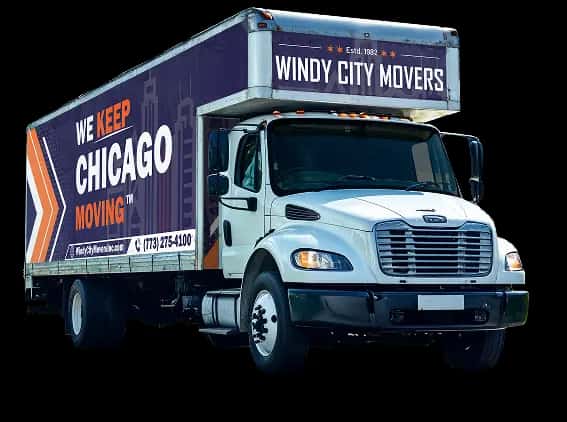
Windy City Movers is a real carrier. We own our trucks, employ our crews, operate from 5222 N Elston Ave, and have been serving Chicago since 1982. Our credentials: ILL.C.C. 153317, US DOT 4338139, MC 1694629. Verifiable through the same databases you'd use to verify anyone else.
Where we fit
For any Chicago move, we handle it ourselves. No brokering, no third-party crews, no unknowns on move day.
Call (773) 275-4100, email info@wcmoving.com, or start with a free quote.
The broker vs. carrier distinction is one of the most important pieces of information about any mover you consider. Federal law requires the disclosure. If a company evades the question, that itself is your answer.
Windy City Movers — Your Trusted Moving Partner